
What Is Hot Stamping Foil? Structure, Process and Applications
Learn what hot stamping foil is, how its PET film, release, color, metallized, and adhesive layers work, and how it is used for packaging, labels, plastics, glass, textiles, and decorative printing. Ginkgo shares professional foil knowledge for global buyers.
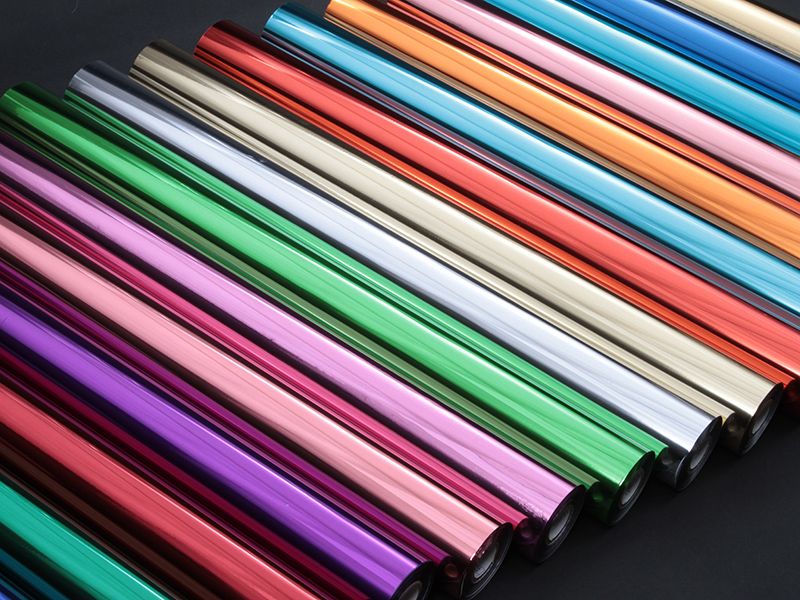
What Is Hot Stamping Foil?
The three major elements of hot stamping are temperature, pressure, and time. Hot stamping foil is the foil with metallic luster. Using high pressure and temperature to stamp the pattern on silicone rubber die with metalized layer and color layer onto the printed matter. It is functional foil with multi-layer coatings. Each coating layer has an unique function and together they achieve hot transferring effect. The structure and preservation methods of hot stamping foil are as shown below.
The Structure of Hot Stamping Foil
PET Film: To support each layer, usually made of PET (polyester film).
Release Film: Also known as separation layer. To separate PET film from Top / aluminum / adhesive layers. It decides pattern transferring.
Top Layer: Protective layer that decides colors and patterns.
Metalized Layer: Metalized electroplating layer. As 90% of the metallic luster of foil come from aluminum, it is also called "aluminum layer".
Adhesion Layer: Thermoplastic resin that attaches to the substrate, could be adjusted per substrate's properties.
Summary:
Release layer allows PET film to be separated and left coating layer attached to stamped objects.
How to Properly Preserve Hot Stamping Foil?
As hot stamping foil is incredibly fragile and the coating layers could not stand downward placement, heavy weight, or dropping. Moreover, 90% of metalized layer is aluminum which has poor resistance to acids, bases and oxidation, the metallic luster will fade when not being preserved properly. Hot stamping foil could be preserved several years when handling with care. However, the shine faded with time and hence we suggest to use them as fast as possible.
Summary:
Methods of preservation
1. Keep them upright.
2. Do not stack on top.
3. Keep dry. Avoid placing on the ground as moisture may affect the quality.
4. After purchasing, use them all within 1 year.
5. Keep them at temperature of 25°C to 30°C and below humidity of 75%.
6. Avoid direct sunlight exposure.
7. Avoid acidic or basic environment.
Gallerys
 Structure of hot stamping foil.
 Please void hot stamping foil from directly exposing to the ground.


- Related products
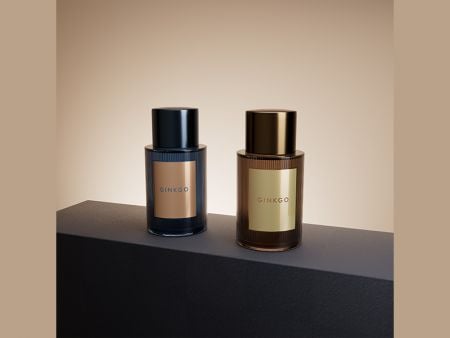
Hot Stamping Foil for Glass and Ceramics
Designed for Premium Products, Combining Luxury and Durability
Glass and ceramic hot stamping foil is a high-performance metallic transfer film specifically designed for glass hot stamping processes and ceramic applications. It is ideal for premium products such as perfume...
Details- Realated Applications
Our Recommendation
 Download
 What Is Hot Stamping Foil? Structure, Process, and Applications
Ginkgo Film Coating Technology Corp., established in 1987 in Taiwan, provides professional knowledge about hot stamping foil, decorative transfer foil, and film coating technology. Hot stamping foil is a multi-layer decorative material commonly used to create metallic, pigment, holographic, pearlescent, and specialty surface effects on packaging, labels, plastic parts, glass bottles, textiles, leather, and premium product decoration. This FAQ helps buyers understand the basic structure, stamping process, and application value of What Is Hot Stamping Foil?.
The performance of hot stamping foil depends on temperature, pressure, time, substrate compatibility, release quality, adhesion, and storage conditions. Ginkgo develops foil solutions with stable transfer quality, clean release, bright surface effects, and dependable production performance for international packaging and printing industries. With ISO 9001:2015 certification and strict quality control, we help customers select suitable decorative foil materials for different product surfaces and manufacturing requirements.
Ginkgo has been offering customers innovative and sustainable decorative foils since 1987, both with advanced coating technology and 30 years of experience, Ginkgo ensures each customer's demands are met.
Accelerating Innovation with Controlled Quality
We specialize in vacuum metallization and precision coating, helping customers accelerate new effects, materials, and applications under controlled quality, so R&D results can be successfully implemented in real-world use.

Quality Built Through R&D
Quality is built into our R&D through formulation development, process setup, and critical inspections to ensure consistent appearance and performance.

Innovation You Can Apply
We evaluate feasibility and stability to help innovative effects and specifications move smoothly from samples into real applications.

Speed Through Collaboration
With clear communication and fast response, we shorten testing and decision cycles to accelerate projects with controlled risk.


